
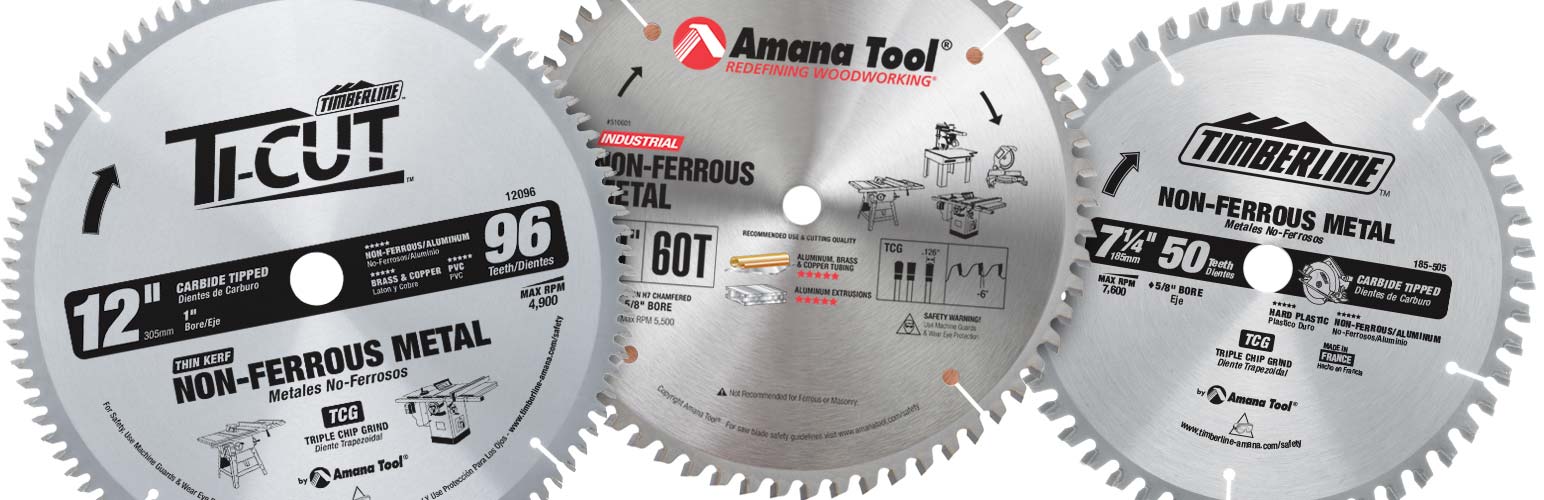
Non-Ferrous Metals Saw Blades
Cutting aluminum, brass, or copper with the wrong blade? You’ll get burrs, chips, and maybe even a kickback scare you don’t want. That’s why you need a proper non-ferrous metal saw blade. These blades are built with a triple-chip grind and negative hook angle, so they chew through soft metals cleanly without tearing up the material—or your nerves.
Click here for complete description
At ToolsToday, we stock aluminum cutting saw blades, carbide tipped non-ferrous blades, and models sized for table saws, chop saws, and sliding miters. Whether you’re cutting extrusions, copper pipe, or brass fittings, these blades are made to give you smooth, burr-free cuts every time.
Why these blades are worth it:
- Clean, accurate cuts on aluminum, copper, brass, and composites
- Triple-chip grind teeth reduce chipping and extend blade life
- Amana Tool non-ferrous blades use industrial-grade carbide for long-lasting performance
- Negative/low hook angles = smoother, safer cutting
- Great for extrusions, piping, fittings, and panel work
Looking for the best saw blade for cutting non-ferrous metals like aluminum or tips on how to cut aluminum without burring? You’ll find the right blades here to match your saw and your workload.
Frequently Asked Questions
What are non-ferrous metal saw blades?
They’re blades designed for softer metals like aluminum, brass, and copper. With triple-chip grind teeth and a low hook angle, they deliver smooth, burr-free cuts where a wood blade would struggle or fail.
What materials can these blades cut?
Perfect for aluminum extrusions, copper pipe, brass hardware, PVC, acrylic, and composite panels. They cut clean without clogging or chipping fragile surfaces.
What makes Amana Tool blades stand out?
Amana Tool’s non-ferrous blades use industrial-grade carbide tips, laser-cut expansion slots, and precision balancing. That means cooler cuts, less noise, and blades that can be sharpened multiple times before replacement.
Can I just use a wood blade on aluminum?
Nope. Wood blades don’t have the right geometry for non-ferrous metals. Using one can cause chipping, overheating, and even dangerous kickback. Always go with a blade rated specifically for non-ferrous cutting.
What saws work best with these blades?
A sliding miter saw, chop saw, or table saw works great—as long as it runs at the correct RPM for metal cutting. Clamp your material, use the blade guard, and apply cutting wax or coolant when needed.
How long will these blades last?
It depends on what and how you cut, but with proper use and lubrication, carbide-tipped non-ferrous blades can handle a ton of work. Plus, they can be resharpened multiple times, giving them a long shop life.
Should I use coolant when cutting aluminum?
Yes—especially for thicker stock or production runs. Cutting wax or coolant keeps heat down, extends blade life, and leaves you with a cleaner cut.
How many teeth should my blade have?
Generally, 80–120 teeth is the sweet spot. More teeth = smoother cuts, while fewer teeth help when tackling thicker material at a faster feed rate.