Router Bit Glossary: Router Bit Terms Explained
Table of Contents
The Complete Router Bit Reference Guide (Updated for 2026)
Choosing the right router bit shouldn't require guessing. That's why we've created this comprehensive Router Bit Glossary—a continually updated reference covering router bit profiles, cutting geometries, CNC tooling, coatings, materials, and woodworking terminology.
Use it to learn the differences between bit types, compare applications, and find the right tool with confidence. When you're ready, you'll also find one of the industry's largest selections of industrial-quality Amana Tool router bits, in stock and ready to ship.
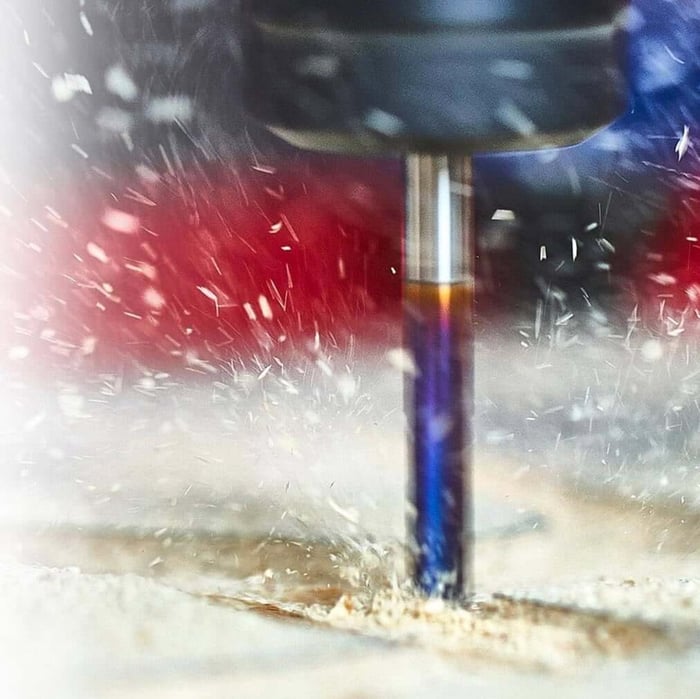
Router Bit Basics
Core Terminology Every Woodworker or CNC Operator Needs [Click to Open/Close]
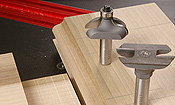
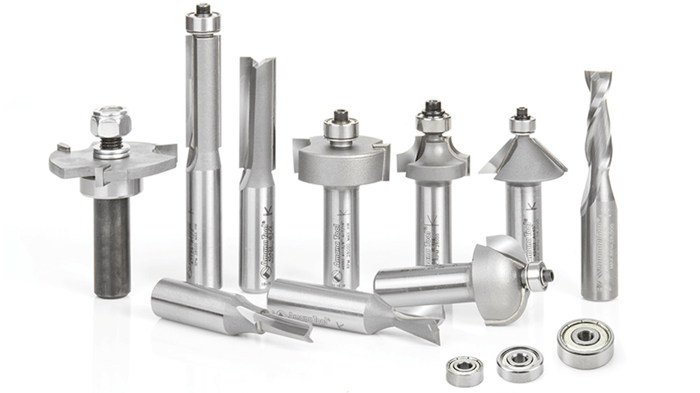
Router Bit
Pieces that attach to a router tool, mainly used for cutting and carving wood. Router bits come in a variety of shapes and sizes.
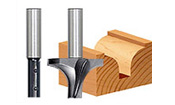
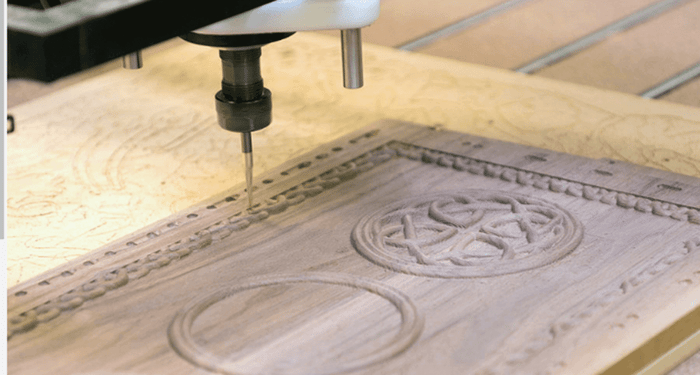
CNC Router Bit
Router bits designed to withstand the higher speeds of CNC router machines. Many CNC router bits can also be used in tabletop and handheld routers.
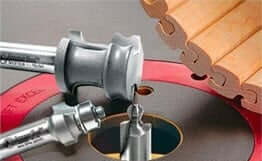
Router Bit Sets
A number of router bits used together to achieve a specific woodworking task. For example the Tambour Door Router Bit Set includes 3 router bits used create tambour doors for desks or appliance garages. Sets can also be simply collections of useful bits.
Anatomy of a Router Bit
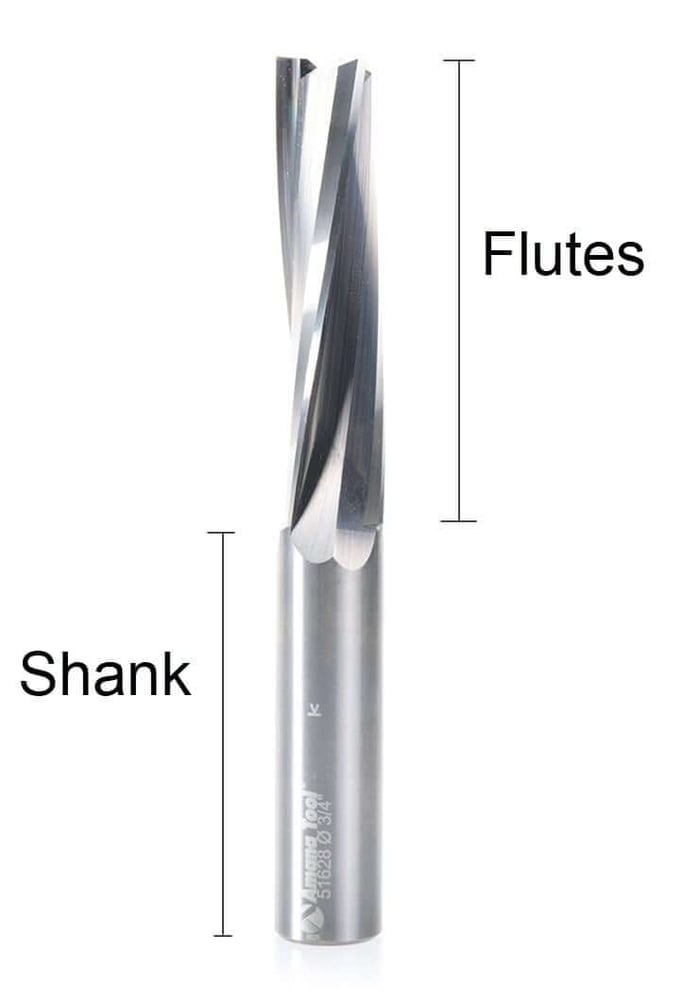
Flutes
A router bit flute is the groove that contains the cutting edge and carries chips away from the cut. The number and design of the flutes affect cut quality and performance.
Shank
A router bit shank is the smooth, non-cutting portion of the bit that fits into the router collet. It holds the bit securely while transferring power from the router to the cutting edges.
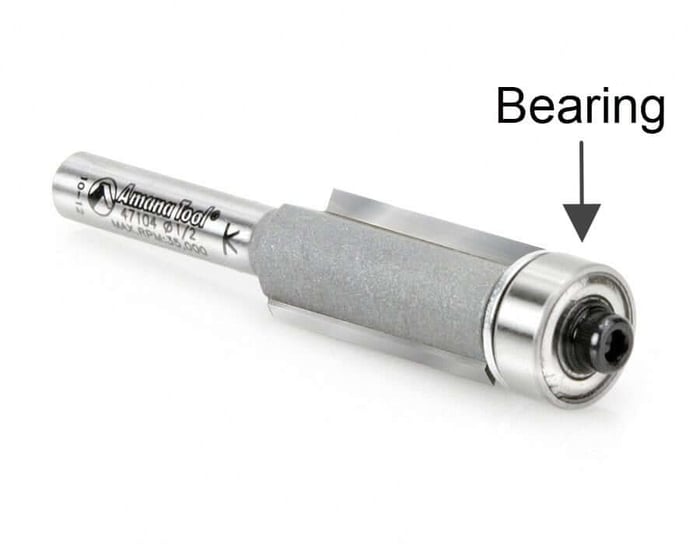
Bearing
A router bit bearing is a small wheel mounted on the bit that acts as a guide. It follows an edge, template, or surface to help control the depth and shape of the cut.
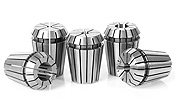
Collet
A collet is the part of a router that grips and holds the shank of the router bit. It keeps the bit securely centered while it spins.
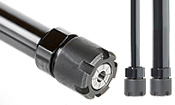
Tool Extenders
A tool extender is an accessory that increases the reach of a router bit by extending it farther from the collet. It provides additional clearance and cutting depth but should be used carefully, as increased reach can reduce rigidity and increase vibration.
Carbide Technology
Brazed Carbide / Carbide Tipped
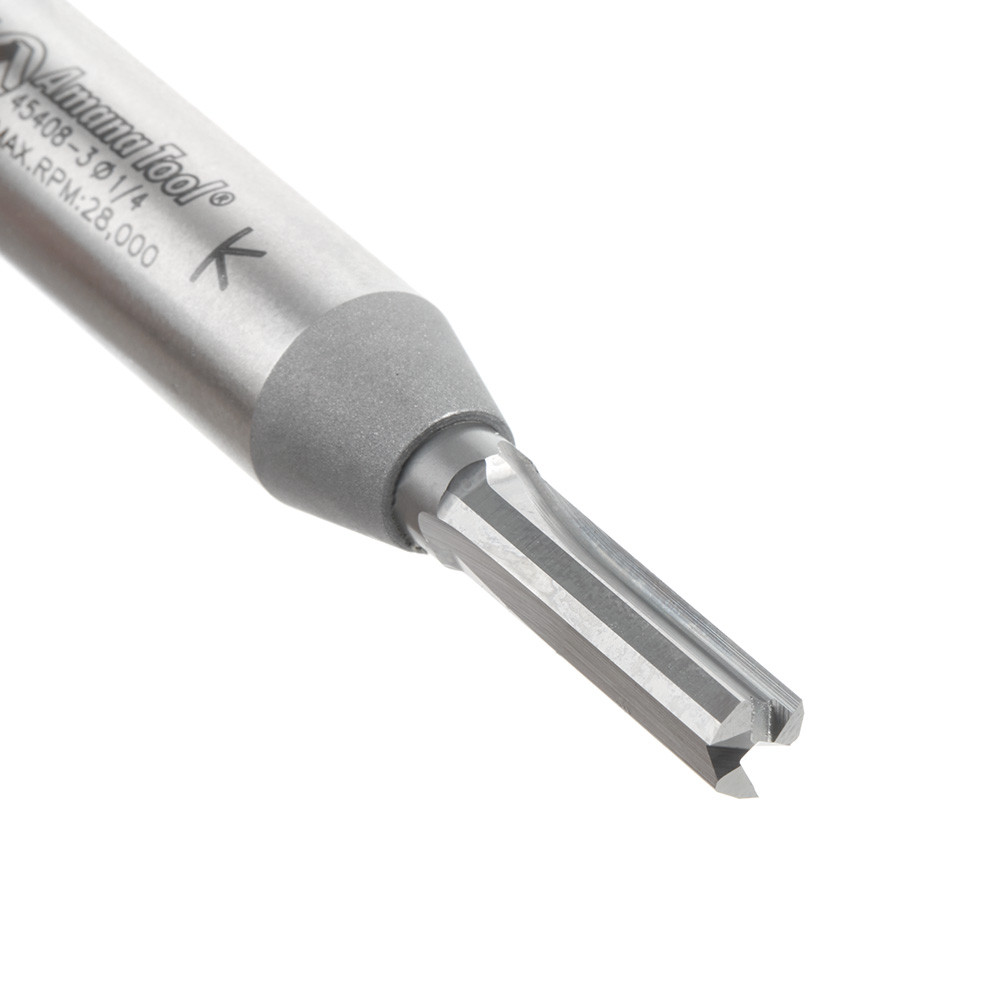
A cutting tool design in which a carbide cutting edge is permanently bonded to a steel body using a brazing process, providing a durable and cost-effective alternative to solid carbide tools.
Solid Carbide
Solid carbide bits can use harder, longer-wearing carbide than brazed tools because no high-heat brazing process is required during manufacturing.
Milling & Cutting Dynamics
Milling
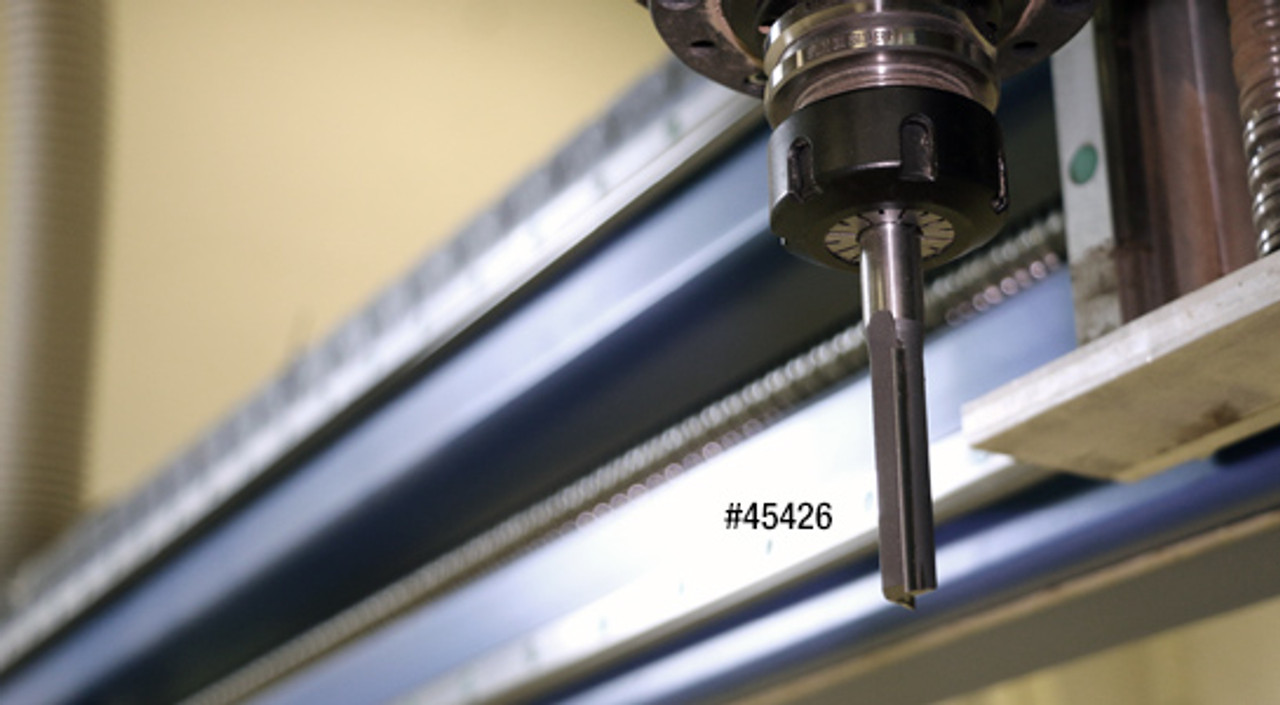
The process of shaping material by feeding a workpiece past a rotating cutter, or by moving a rotating cutter across a fixed workpiece.

Speed
How fast a router bit spins, measured in revolutions per minute (RPM).
Feed
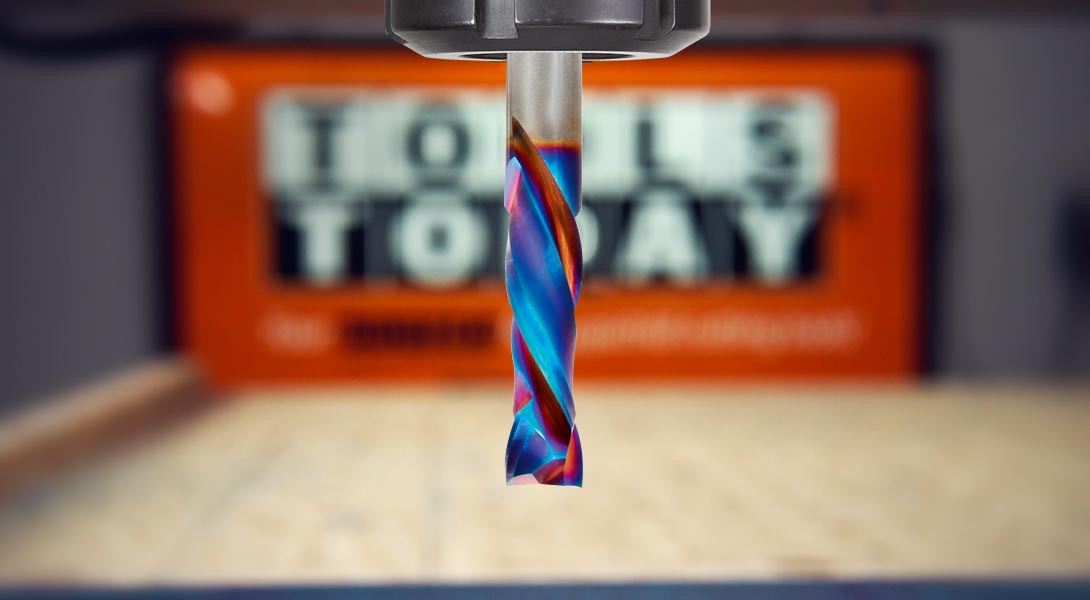
How fast the tool or material moves through the cut, measured in inches per minute (IPM).
Chip Load
The amount of material removed by each flute during a cut.
Dive deeper in Understanding CNC Feeds and Speeds.
Anti-Kickback Design
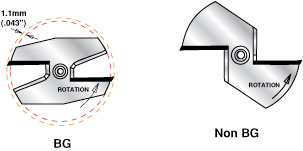
Offers some degree of safety to the end-user because it limits the ‘chip-thickness’ of the material being cut. In other words, the cutting tool will take less of a ‘bite’, thereby decreasing the likelihood of a kickback.
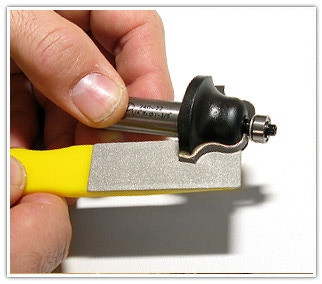
Router Bit Maintenance
Regular cleaning, inspection, and care that help router bits cut cleaner, last longer, and operate safely. [Read more.]

Router Bit Safety
Safe operating practices that help prevent kickback, tool damage, and injury when using router bits. See our Safety Guidelines / Lineamientos de Seguridad.
For more details, see Router Bit Technical Information
Router Bit Profiles
Traditional Woodworking [Click to Open/Close]
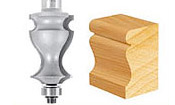
Architectural / Molding Bits
These bits are used to create decorative moldings and trim. Too many to list here; get a sense of what's available in Specialty Router Bits for Millwork Shops: The Profiles That Set You Apart.
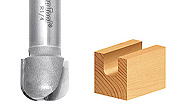
Bowl & Tray Bits
These bits are used for routing solid wood serving trays or flat dishes.
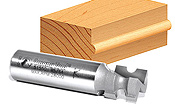
Bullnose Bits
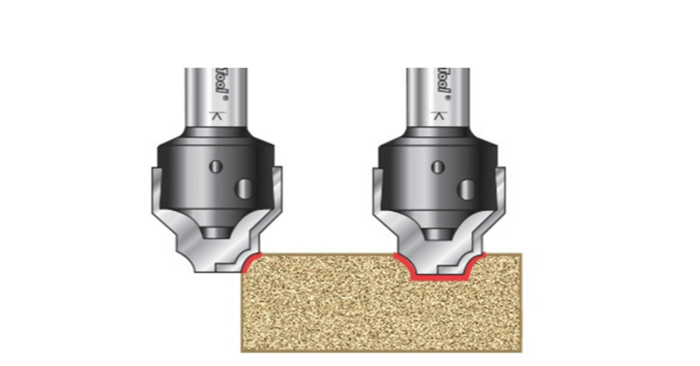
Used to carve a rounded edge, often used for the front edge on a counter top. Unlike roundover bits, they create a full half-circle shape.
Corner Round Bits
Another name sometimes used for Round Over Bits.
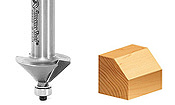
Chamfer Bits
Router bits that cut an angle, usually 45 degrees.
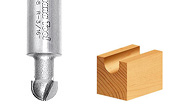
Core Box Bits
Core box bits are used to cut half-round grooves for fluted moldings, columns, millwork, and signs. When used with an edge guide, this bit will also cut coves.
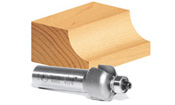
Cove Bits
Cut a rounded shape into the material. Coves are used to bridge the gap between the bottom of the wall and the floor. A cove may also be used to form an inside corner.
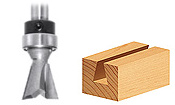
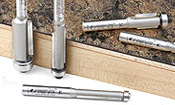
Flush Trim & Pattern Bits
Flush trim bits are used to trim one layer of material "flush" with another, and to carve templates and patterns.
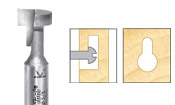
Keyhole Bits
The keyhole router bit is used to cut keyhole shaped slots into plaques, picture frames and other hanging woodworks.
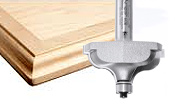
Ogee Bits
Ogee bits are used to carve an S-shaped curve in moldings and decorative designs. It has a convex at the top which smoothly blends into a concave at the bottom. Read our article "What is an Ogee Bit?"
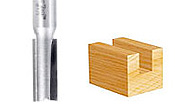
Plunge Bits
In contrast to the Profile / Edge-Forming bits listed here, Plunge bits are designed for plunging into the material vertically. Don’t try to plunge with a non-plunge bit unless you're routing in from the edge.

Rabbeting Bits
Rabbeting bits quickly cut L-shaped shoulders along the edge. Great for joinery, drawer backs, and cabinet construction.
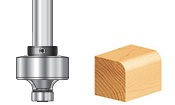
Round Over Bits
Soften square edges for a finished, professional look. The radius determines how much curve you get.
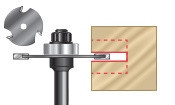
Slot Cutting Bits
Router bits designed to cut narrow grooves and slots at precise depths. Commonly used for spline joints, biscuit slots, T-molding grooves, decorative inlays, and panel construction.
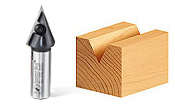
V-Groove & Engraving Bits
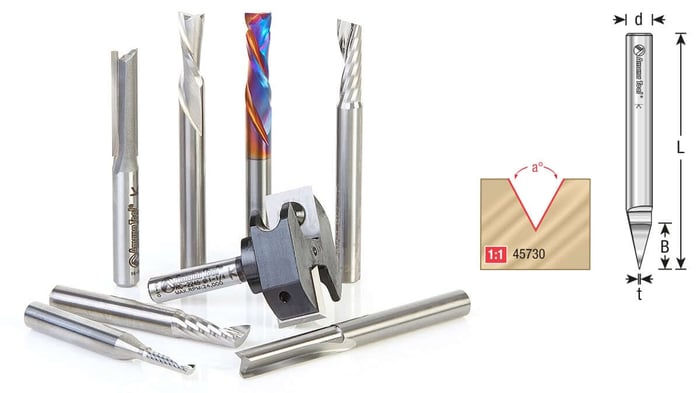
Cut V-shaped decorative grooves or lettering. A go-to for sign makers and panel detailing. See V-Groove Router Bits; 30°, 45°, 60°, 90°, & 140° Examples.
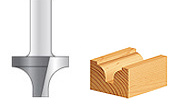
Point Cutting Roundover (a.k.a. Ovolo) Bits
A plunging version of Round Over router bits or Corner Round bits. What a V-Groove bit is to a Chamfer, an Ovolo is to a Roundover.
For more information see 11 Router Bits Every Woodworker Should Own.
CNC Bit Geometry & Cutting Styles
The Most Common CNC Router Bit Types and Their Uses [Click to Open/Close]
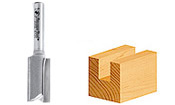
Straight Plunge Bits
Straight plunge bits are used for routing straight grooves, rabbets, dados, joints, mortises, trimming material or making a general cut.
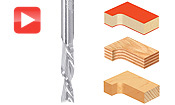
Spiral Plunge Bits
Spiral bits are designed like a drill and are used to make deep cuts to the surface of your wood piece.
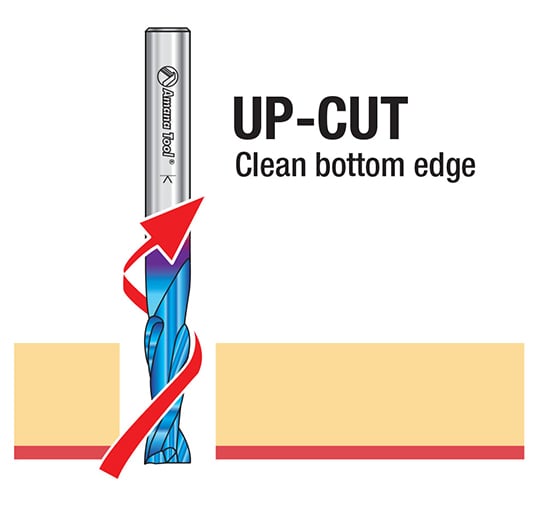
Upcut Bits
Upcut bits are the go to choice where having a clean bottom surface or getting maximum chip evacuation on deeper profile cuts is most important.
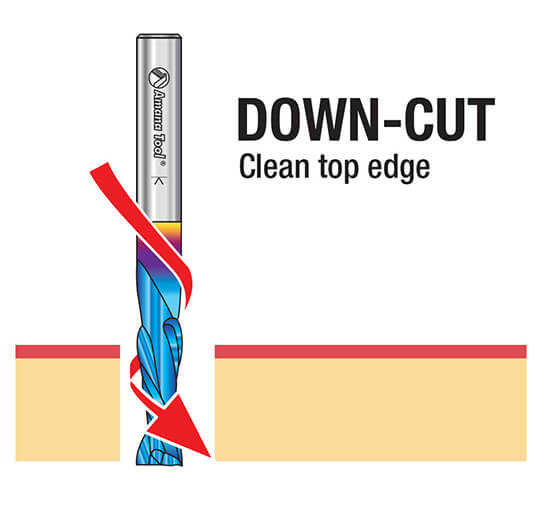
Spiral Down-Cut Bits
A downcut bit is the perfect choice for cuts where having a clean top surface, like creating non-through pockets, is necessary.
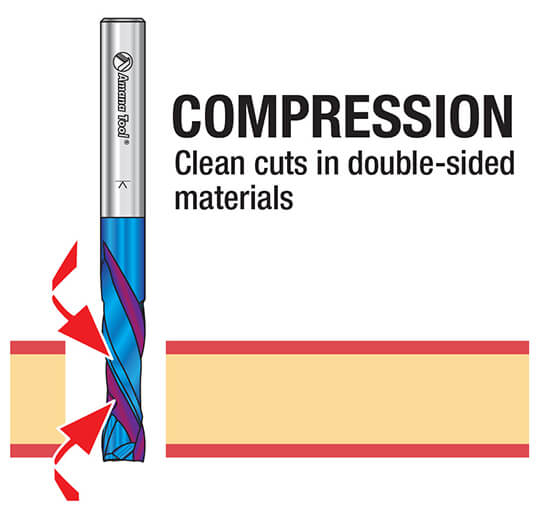
Compression Spiral Bits
Compression bits are the best of both worlds, containing an upcut and a downcut grind on the same bit.
Learn more about Downcut, Upcut, and Compression Bits.
Ball Nose & Tapered Ball Nose Bits
Unlike standard spiral bits, Ball Nose bits are designed to machine smooth 3D contours and rounded surfaces. Tapered Ball Nose bits add strength and rigidity for finer detail and deeper carving with less deflection.
O-Flute Bits
O-Flute Bits are router bits designed for cutting plastics, aluminum, and other soft materials. Their single flute efficiently clears chips and reduces heat buildup, helping produce cleaner cuts and better edge finishes.
Spoilboard Surfacing Bits
CNC bits designed to flatten spoilboards and other surfaces, ensuring a level work area and consistent cutting depth across the entire project. Read Flattening and Spoilboard Bits: How to Get a Smooth, Level Surface
For more information see our "Guide to CNC Bits.
Router Bits by Material
Match the Right Router Bit to the Material You're Cutting [Click to Open/Close]
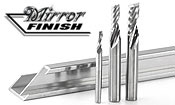
Aluminum and Non-Ferrous Metals
Aluminum, brass, copper, and other non-ferrous metals require sharp cutting edges and efficient chip evacuation to prevent heat buildup and chip welding. Router bits designed for these materials typically feature polished flutes and specialized coatings that produce cleaner cuts and extend tool life.
See our articles, Tips for Working With Aluminum on Your CNC Router Table, and Best CNC Router Bits for Cutting Aluminum.
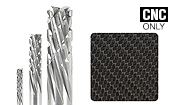
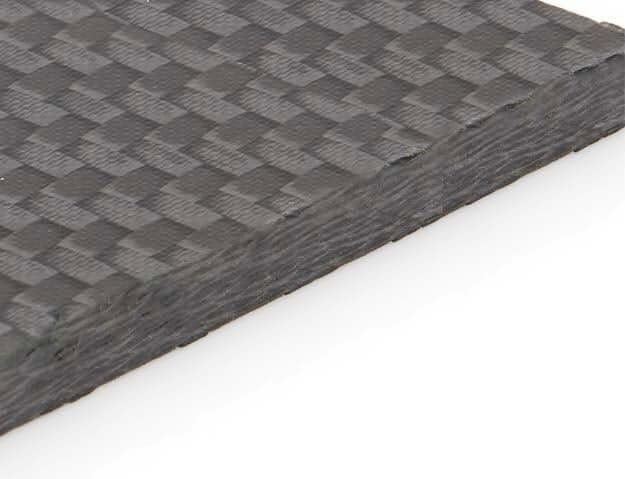
Carbon Fiber (CFRP)
Carbon fiber is lightweight and extremely strong, but its abrasive fibers can quickly wear down ordinary cutting tools. Router bits designed for carbon fiber use specialized carbide grades and geometries that resist wear, minimize fraying, and produce cleaner edges.
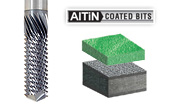
Fiberglass and Abrasive Materials
Fiberglass, G10, phenolic, and similar materials are highly abrasive and can rapidly dull standard router bits. Specialized cutting tools are designed to withstand this wear while reducing edge chipping, delamination, and premature tool failure.
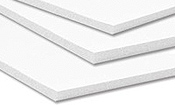
Foam Cutting Router Bits
Foam materials are soft and easy to cut, but conventional bits can tear the material or leave rough edges. Foam-cutting router bits typically feature large flutes and geometries designed to remove material efficiently while producing smoother surfaces and cleaner contours. Learn How to Choose the Right Bit for Foam Cutting.
Honeycomb Materials
Honeycomb panels present a unique challenge because much of the material consists of empty space rather than solid stock. Router bits designed for honeycomb materials help reduce tearing, crushing, and edge damage while producing clean, accurate cuts.
Plastics & Acrylics
Plastics and acrylics can melt, chip, or weld material back into the cut when heat builds up. Router bits designed for these materials often feature polished O-flute geometry that clears chips efficiently, reduces friction, and produces smoother edges.
Deeper dives: Best Blades and Bits for Cutting Plastic and Spiral ‘O’ Flute CNC Router Bits Produce Super-Clean Cuts in Plastic, Nylon, Polycarbonate & More
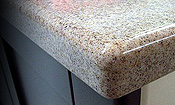
Solid Surface Materials
Solid surface materials such as Corian® and similar countertop products require clean edges and smooth finishes for seamless fabrication. Router bits designed for these materials help reduce chipping while delivering the accuracy needed for trimming, profiling, and joint preparation. Learn more about Working with Solid Surface Materials.
Wood, Plywood, MDF and Melamine
Different wood-based materials present different cutting challenges. Solid wood can tear along the grain, plywood can splinter veneers, MDF produces fine dust, and melamine is prone to edge chipping. Specialized router bit geometries help improve cut quality and surface finish across these materials.
Tool Coatings & Advanced Tool Technology
How Coatings & Tool Technology Improve Performance [Click to Open/Close]
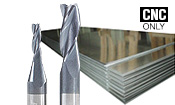
AlTiN Coating
AlTiN (Aluminum Titanium Nitride): A heat-resistant coating designed for high-speed machining and abrasive materials. It helps tools withstand elevated temperatures and reduces wear in demanding applications such as Steel/Stainless Steel/Non-Ferrous Metals, & Composite cutting.
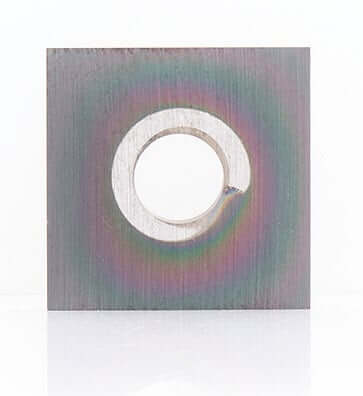
DLC Coating
DLC (Diamond-Like Carbon): An ultra-low-friction nanocomposite coating with the unique properties of natural diamond: low friction, high hardness, and high corrosion resistance. Excellent for MDF/HDF and composite materials.
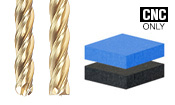
TiN Coating
TiN (Titanium Nitride): A hard, wear-resistant coating commonly recognized by its gold color. It helps harden and protect the cutting edges. In addition TiN helps smooth the flutes for improved chip ejection when cutting foam and styrene, as well as plastics and wood.
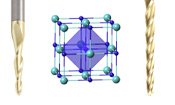
ZrN Coating
ZrN (Zirconium Nitride): A smooth, low-friction coating often used for aluminum, plastics, and other non-ferrous materials. It helps prevent material from sticking to the cutting edge. Read more in Best CNC Router Bits for Cutting Aluminum, and see the ZrN Coated Router Bit brochure.
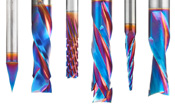
Spektra™ Coating
Amana Tool's proprietary nanocomposite coating designed to reduce friction, improve chip evacuation, and significantly extend tool life, especially in abrasive materials. Dive deep in What is Spektra Coating? or browse the Spektra brochure.

PLX Coating
PLX Coating: A proprietary Amana Tool coating engineered to reduce heat and wear while improving cutting performance and tool longevity. Designed for CNC applications requiring high feed rates and flawless compression cuts. Particularly suitable for double-sided melamine or laminated material.

PCD (Polycrystalline Diamond)
PCD tooling is manufactured in a high-temperature and high-pressure laboratory that fuses diamond particles onto a carbide substrate, which allows the diamond to be brazed onto a tool body. Quality of finish is significantly improved when machining abrasive materials such as aluminum, aluminum-composite (ACM), and non-ferrous metals. Tool life is 25 times longer or more when compared with standard carbide tipped tooling.
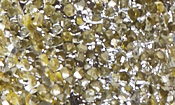
Diamond Grit Coating
Diamond Grit tools use bonded diamond particles as an abrasive cutting surface and offer outstanding finishes in the most abrasive of glass fiber or Carbon Fiber Reinforced Polymer (CFRP) applications. Despite similar name to PCD tools, they are designed for different cutting and grinding applications.
CNC Tooling & Specialized Systems
Specialized CNC tools designed for specific tasks or applications. [Click to Open/Close]
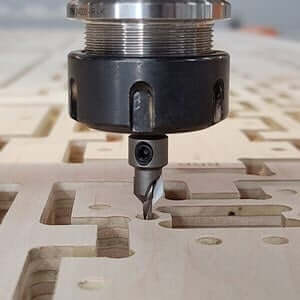
Combination Drill/Countersink Bits
Combination drill and countersink bits create both the pilot hole and countersink in a single operation, producing clean, consistent holes for flat-head screws while reducing machining time.
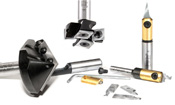
CNC Insert Tooling Systems
Insert tooling systems use replaceable solid carbide knives instead of permanently brazed cutting edges. When an insert wears out, you simply rotate or replace the knife, reducing downtime and lowering long-term tooling costs.
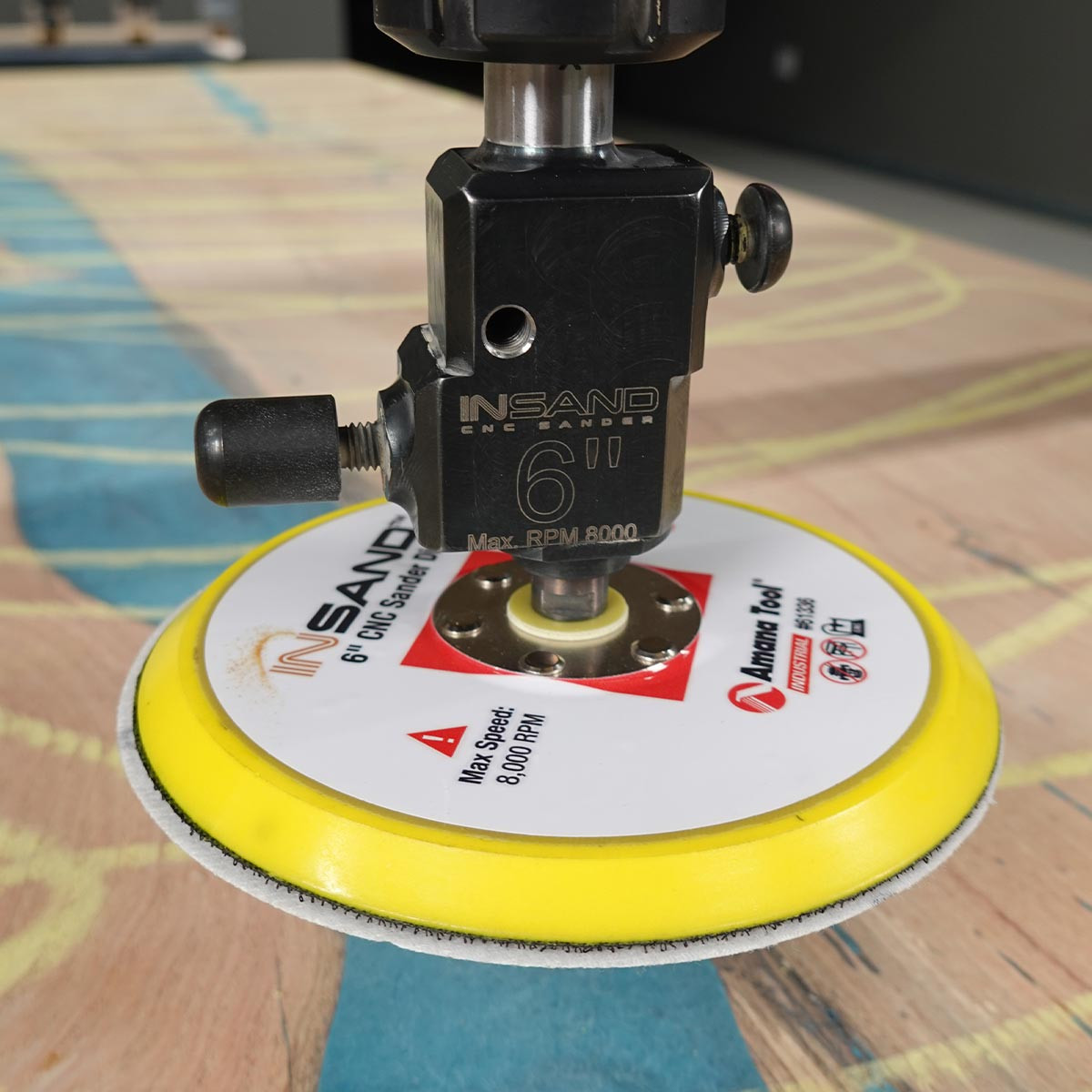
CNC Sanding Systems
CNC sanding systems automate surface preparation by sanding parts directly on the CNC machine, reducing manual labor and workpiece handling while producing smooth, consistent surfaces ready for finishing.
Joinery and Woodworking Terms
Common woodworking joints and the bits used to create them. [Click to Open/Close]
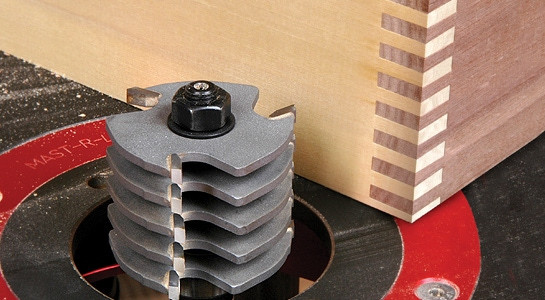
Box Joint (Finger Joint)
A box joint (also called a finger joint) uses interlocking square fingers to create a strong, glue-ready corner for boxes, drawers, and cabinets.
For production work, finger-joint bits are commonly used to create strong, repeatable interlocking joints.
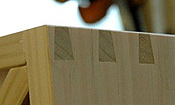
Dovetail Joint
A strong joint created by carving one or more tapered, fan-shaped tenons into one piece of wood, which interlock with a series of mortises carved into the adjoining piece of wood. See Dovetail Joints: 5 Different Types and Their Uses.
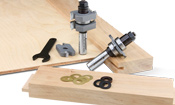
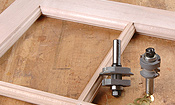
Frame & Panel (Stile & Rail) Construction
Frame and panel construction joins vertical stiles and horizontal rails around a floating center panel, creating strong, stable doors and cabinet components. Specialized router bits cut the matching profiles in a single setup.
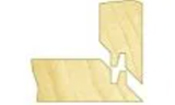
Lock Miter Joint
A lock miter joint uses interlocking profiles to create a stronger, self-aligning 90° corner than a standard miter joint. Lock miter router bits cut both mating pieces, making them ideal for boxes, cabinets, columns, and furniture.
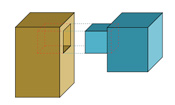
Mortise & Tenon
The tenon, formed on the end of a "rail," is inserted into a square or rectangular hole (the mortise). Create a square mortise to receive the tenon with a Mortising Chisel & Drill Bit. Read more about Hollow Chisel Mortise Bits.
Rabbet Joint
A rabbet is a shoulder cut into the edge of a piece of (usually) wood. When viewed in cross-section, a rabbet joint is two-sided, and is open at either end. See 4 Ways to Make Rabbet Joints.
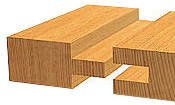
Tongue & Groove Joint
This joint is often used for wood paneling, flooring, parquet and other similar woodworks. The joint is used to fit 2 or more similar objects together edge-to-edge. Each piece has a slot or "groove" cut all along one edge, and a thin, deep ridge or "tongue" shaped on the opposite edge. They then fit together closely. See Mastering Woodworking with Tongue and Groove Router Bits.
Can't find the term you're looking for?
Our Router Bit Glossary is continually updated as new tooling, coatings, and woodworking techniques emerge. If there's a router bit term you'd like us to define, let us know.